柔の道
Oswaldo Fadda: jiu-jitsu's other lineage beat the Gracies
Oswaldo Fadda (1921–2005) was a Brazilian jiu-jitsu red belt whose lineage is traced through Luiz França to Mitsuyo Maeda, not through the Gracies. He taught in Rio's working-class suburbs, and in the 1950s his students, foot-lock specialists, beat a Gracie academy team in a public challenge, proving jiu-jitsu in Brazil had a second root.
The story usually ends with one family. Maeda to Carlos, Carlos to his brothers, the academy in Rio, the open challenges, the name that traveled the world. It is a good story, and most of it is true. But jiu-jitsu in Brazil was never only the Gracies'. A second line ran alongside the famous one, tracing itself to the same northern transmission the Gracies claim, down into the working-class north of Rio. In the 1950s it challenged the Gracies on their own mats and, a year later, beat them in public.
Luiz França, the disputed root
The second line traces back to Luiz França. By the usual account he learned from the Japanese who had come to Brazil, Soshihiro Satake in Manaus, Maeda in Belém, Geo Omori in São Paulo, though the historian Robert Drysdale notes there is no hard evidence that he trained under any of them. What is not in doubt is what França did next. He taught, and he taught away from the spotlight the Gracies were busy building, and one of his students carried the line further than anyone expected.
Oswaldo Fadda and the north of Rio
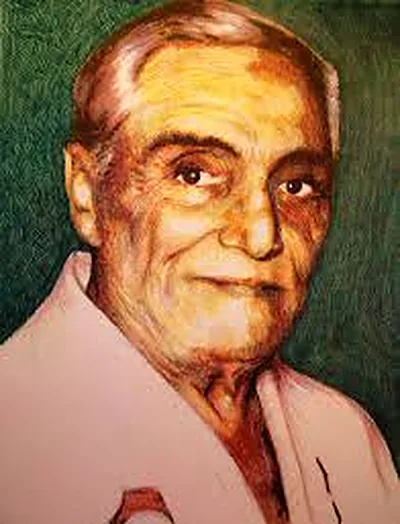
That student was Oswaldo Fadda, born in Bento Ribeiro, a poor suburb in the north of the city. In the Rio of the 1940s, jiu-jitsu was understood as a sport for the well-off, and the Gracie academy in the affluent south was its temple. França promoted Fadda to black belt around 1942, and Fadda opened the art up instead of guarding it. He taught the people around him, the children of the suburbs and men who could not have afforded a place in the south, often for little or nothing, in modest gyms and on the sand. In January 1950 he opened his own academy on the outskirts of the city. The Gracie world regarded him as an outsider, and he taught anyway.
Fadda challenges the Gracies, 1955 and 1956
By 1955 Fadda judged his school ready, and he did the most Brazilian thing a jiu-jitsu man could do: he issued a public challenge, through the newspapers, to the most famous name in the art. The words the Rio press carried survive: "We wish to challenge the Gracies," Fadda declared. "We respect them as the formidable adversaries they are, but we do not fear them. We have twenty pupils ready." Hélio Gracie accepted, and the two teams met at the Gracie academy itself. Historians still dispute that first result. One newspaper scored it seven bouts to three for the Gracies with four draws, while other accounts, including Reila Gracie's biography of Carlos, record Fadda's team winning on the strength of their foot locks.
The two schools met again the following year, in July 1956, at the Maracanãzinho arena in Rio, on the undercard of a vale tudo match between Carlson Gracie and Waldemar Santana, one of the near-no-rules bouts of strikes and grappling that defined the era. This time Fadda's men won without controversy. His fighters were specialists in foot locks: submissions that trap the opponent's foot and twist the ankle or knee until he has to tap. Such holds were looked down on. Attacks on the legs were treated as low and unrefined, the mark of a fighter with no better game, and the Gracie students jeered "sapateiro," shoemaker, at every attempt. A cobbler spends his working day at other men's feet, and the jab carried a class edge as well, aimed at an art the poor had claimed. The shoemakers' holds worked anyway. Afterward Fadda told Revista do Esporte, in a line that outlived him: "We put an end to the Gracie taboo."
Why Fadda's lineage matters
Neither meeting dethroned anyone. The Gracie name kept growing, and it is still the first one most people learn. But those afternoons proved something the single-family story leaves out: excellence in jiu-jitsu already lived outside the famous academy, and it lived among people that academy had priced out. Fadda's line kept the art open to the poor, and it did not need permission to be good. Recognition came anyway: Fadda died a ninth-degree red belt, one of the highest ranks the art awards, and in 2014 one of Brazil's jiu-jitsu federations, the CBJJE, raised him to the tenth posthumously. Nor did the line die with him: it runs from Fadda through his black belt Monir Salomão to Julio Cesar Pereira, whose GFTeam became one of the most decorated competition schools in the sport. The honest history of jiu-jitsu in Brazil is not one house and one name. It is at least two, and one of them belonged to everyone else.
Questions the record raises
Who was Oswaldo Fadda?
Oswaldo Fadda was a Brazilian jiu-jitsu master and one of the highest-ranked teachers outside the Gracie family, a ninth-degree red belt. A black belt under Luiz França, he opened his academy in the north of Rio in 1950 and taught the art to the city's poor and working class when it was still treated as a sport for the rich. He is remembered as the master through whom the main non-Gracie lineage of Brazilian jiu-jitsu survives.
Did Oswaldo Fadda beat the Gracies?
His team did, though the first meeting is disputed. When Fadda's students and the Gracie academy first met in 1955, one newspaper scored it for the Gracies while other accounts gave it to Fadda. The two sides met again in 1956, and that time Fadda's team won without controversy, still going to the legs the Gracie students mocked. The result did not end the Gracie name, but it proved jiu-jitsu was strong outside it.
How are Luiz França and Oswaldo Fadda connected?
Luiz França was Fadda's teacher. By the usual account França carried a line of jiu-jitsu south from the Amazon, where the art is said to have first reached Brazil, though that origin is the part historians cannot document. What is firm is that around 1942 he promoted Fadda to black belt. Fadda then built on it, opening his own academy and passing the art to students the Gracie school never reached. The França-to-Fadda line is the best-known non-Gracie lineage in the sport.
Why were foot locks controversial in early Brazilian jiu-jitsu?
Foot locks were looked down on for reasons of status, not effectiveness. Attacks on the legs were seen as crude and low, the resort of a fighter without a refined top game, and the Gracie students mocked Fadda's men as "sapateiro," shoemakers, for using them. The insult carried a class edge, since Fadda's art belonged to the working poor. The holds worked regardless, and leg attacks are central to the modern sport.
Did Luiz França learn from Mitsuyo Maeda?
It is not certain. The usual account has França learning from the Japanese judoka in Brazil, including Maeda in Belém, but the historian Robert Drysdale finds no hard evidence that he trained under any of them. What is firm is the line from França to Oswaldo Fadda, and from Fadda to the working-class lineage he built. Where França himself learned is one of the open questions of the art's early history.
This is a beginner's journal, not instruction. Nothing here is training, health, or medical advice. Learn from a qualified coach, and tap early. Disclaimer