柔の道
Conde Koma: Mitsuyo Maeda, who brought jiu-jitsu to Brazil
Mitsuyo Maeda (前田光世, 1878–1941), known as Conde Koma, was a Kōdōkan judoka who left Japan in 1904, fought hundreds of prize matches across three continents, reached Brazil in 1914 and settled in Belém, where, by the received account, his teaching reached Carlos Gracie and became the root of Brazilian jiu-jitsu. The record disputes how.
Mitsuyo Maeda is usually introduced as the master who carried jiu-jitsu to Brazil and handed it to the Gracies. That is true in outline and misleading in spirit. The man who reached Belém was not a monk dispensing a secret. He was a working prizefighter, one of the best in the world at what he did, and what he did was something his own teacher had told him not to.
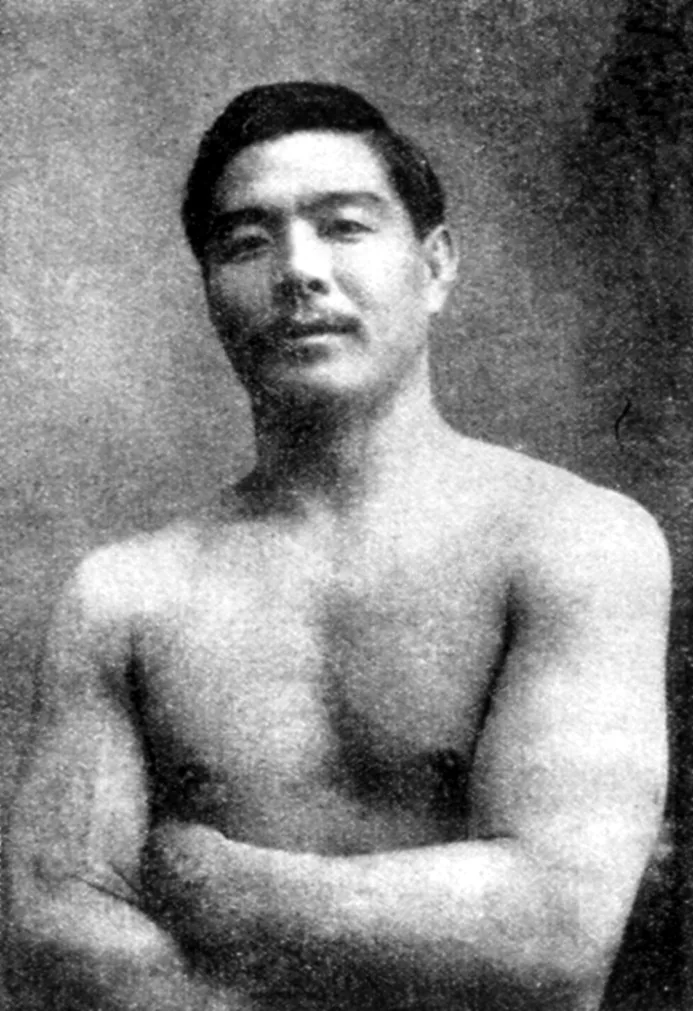
Sent to teach, turned to fight
Maeda left Japan in 1904 as a Kōdōkan judoka, part of a small group sent abroad to demonstrate and spread Kanō's new art. The demonstrations did not pay. Fees were thin, expenses were not, and to keep moving Maeda began accepting paid challenge matches against wrestlers, boxers, and brawlers of every style. This was not Kōdōkan policy. Kanō had built judo partly to lift the art above the prize ring, and here was one of his own men making a living in exactly the ring Kanō disdained. Maeda did it anyway, and he did it extraordinarily well.
The prizefighting circuit
For most of a decade he was a traveling fighter. Between roughly 1905 and 1913 he worked through the United States, England, Belgium, Spain, France, Cuba, Mexico, and down into Central and South America, taking on all comers in theaters and rings. Somewhere along the way he became Conde Koma, a stage name he carried for the rest of his career. He was not demonstrating a pure tradition on that circuit. He was testing it, night after night, against catch wrestlers and strongmen, and folding whatever worked into what he already knew. The road rewrote the art he carried.
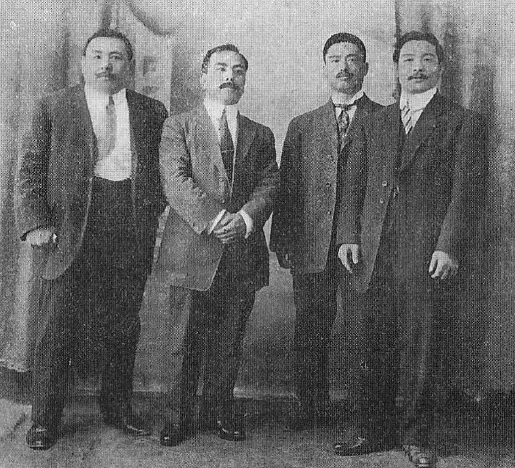
Belém
He reached Brazil in 1914 and by the end of 1915 had settled in Belém, a river city near the mouth of the Amazon, far from the country's south. There he kept fighting and began to teach, giving demonstrations that drew local attention in late 1915. Belém is where the story finally touches the Gracie name, through Gastão Gracie, a local businessman who moved in the world of Maeda's promoters. What is certain is that Maeda put down roots in Belém, took students, and made the city a place where Japanese jiu-jitsu was taught and fought in public. What exactly passed between Maeda and the Gracie family, how much, to whom, and for how long, is the most disputed question in the whole history, and it belongs to the next chapter.
The man, not the myth
The point worth holding onto is that Maeda was a real and formidable fighter, not a legend, and that the art he brought was not a sealed tradition. It was the working method of a professional who had spent ten years finding out, in public, what actually held up. He gave Brazil something powerful and unfinished. What Brazil did with it, and who deserves the credit, is where the record gets hard, and where the honest history really begins.
This is a beginner's journal, not instruction. Nothing here is training, health, or medical advice. Learn from a qualified coach, and tap early. Disclaimer