柔の道
Did Maeda really teach Carlos Gracie? Belém's disputed handoff
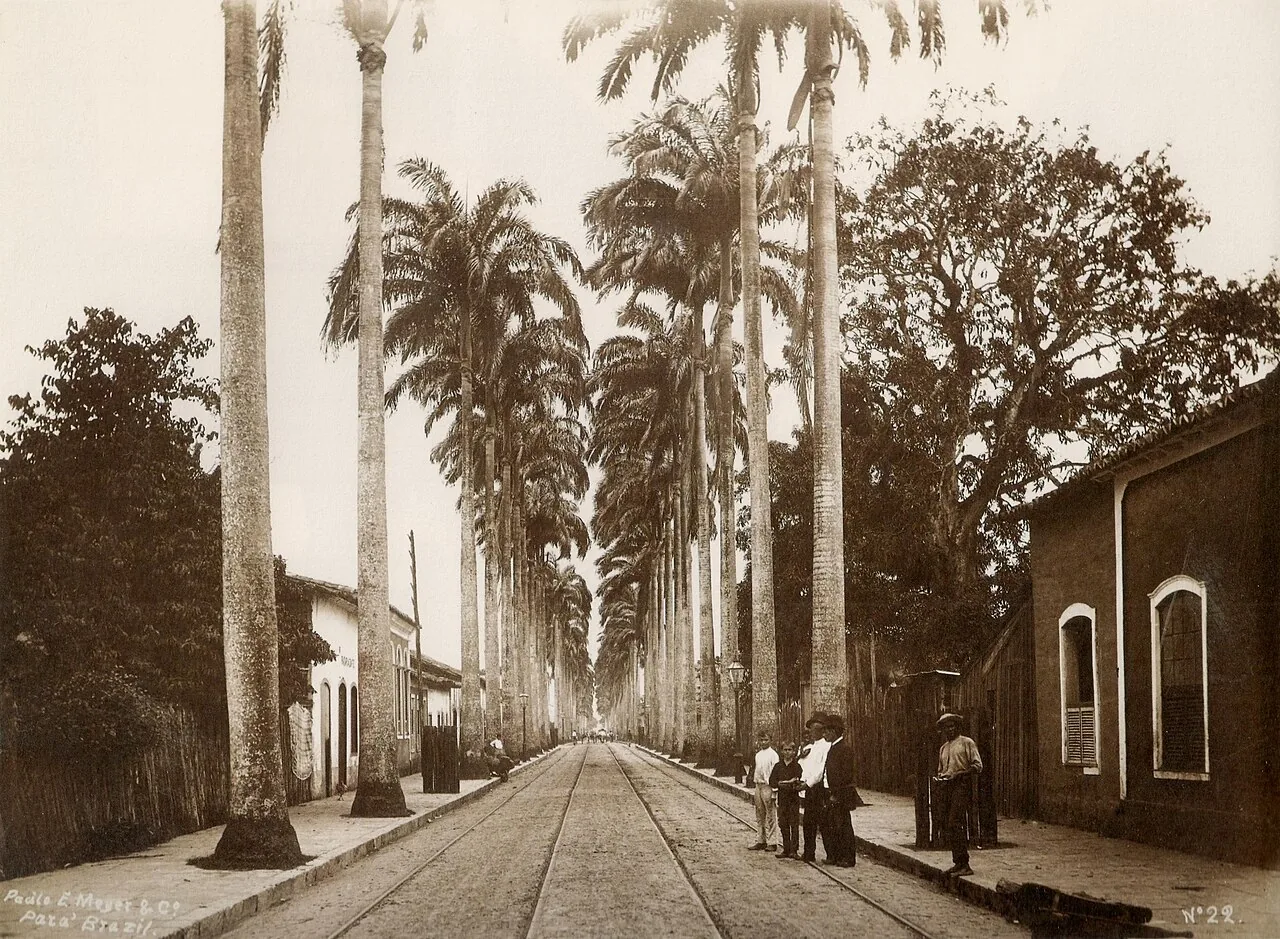
The Belém handoff is the standard origin story of Brazilian jiu-jitsu: Mitsuyo Maeda, the Japanese judoka known as Conde Koma, taught Carlos Gracie in Belém do Pará around 1917, and the Gracie family built the art from those lessons. The record supports Maeda's years in Belém and his teaching there; how much he taught Carlos directly, and for how long, is what the surviving sources dispute.
The poster version of this chapter is one sentence: Maeda taught Carlos Gracie, and jiu-jitsu passed from Japan to Brazil in a single clean handoff. It is the most repeated sentence in the art's history, and it is the one the surviving record supports least well. What the record shows instead is a small, busy world of teachers and students in the Amazon, out of which more than one lineage grew.
More than one teacher in Belém
Maeda did not teach alone, and he did not teach only one family. His companion Soshihiro Satake, who had traveled and fought beside him for years, settled upriver in Manaus and taught there. In Belém, Maeda's circle included Brazilian students who became teachers in their own right, among them Jacyntho Ferro, a well-known local sportsman, and Donato Pires dos Reis, who would later hold official credentials to teach. Luiz França, whom the usual account places among the students of that world, though the paper trail is thin, would carry the art south and seed a lineage of his own, one this series returns to in its own chapter. Whatever reached Brazil came through several pairs of hands.
Gastão, Carlos, and the story the family told
The Gracie family enters here. Gastão Gracie was a Belém businessman whose family, a few generations back, had come to Brazil from Scotland. His world of promoters and showmen overlapped with Maeda's, and he sent his teenage son Carlos to learn. The family's account is direct: Carlos studied under Maeda himself, for several years. Later historians, reading the newspapers and records of the period, found a quieter version: Carlos's time in that school was likely brief, and his day-to-day teacher was likely Ferro, or later Pires dos Reis, as much as Maeda. In 1931, Pires dos Reis publicly disputed the direct-apprentice account. The family maintained it. The plain truth is that no document settles it, and the honest position is to hold the question open.
Why the dispute matters, and why it does not
It matters because history should say what it can prove, and because the other people in that world, Ferro, Pires dos Reis, Satake, França, were real teachers whose names the famous version quietly dropped. It matters less than it seems, though, for one reason: nothing about Carlos Gracie's importance depends on which man ran his classes. Whoever taught him, Carlos was the one who saw what the art could become. He carried it out of the Amazon, taught his brothers, and spent the rest of his life building an institution around it. Plenty of people in Belém learned those techniques. One of them turned it into a dynasty. That is the part no historian disputes, and it is the subject of the next chapter.
This is a beginner's journal, not instruction. Nothing here is training, health, or medical advice. Learn from a qualified coach, and tap early. Disclaimer