柔の道
The Gracie academy and the making of a name
The most famous name in jiu-jitsu was not inherited as destiny. The Gracie family made it, deliberately and over decades, in Rio, far from where the art first landed in Belém. That making is the real story, and it is better than the myth.
Three Gracies share the name that brings most readers here. Carlos Gracie (1902–1994) is the elder brother who carried the art from Belém, where the record disputes exactly who taught him, to Rio, and opened the family's academy there. Hélio Gracie (1913–2009) is his younger brother, whose branch of the family later carried the art to the United States. Carlos Gracie Jr. (born 1956) is Carlos's son, who in 1994 founded the federation that became the IBJJF and who leads the Gracie Barra network, whose schools fill this site's directory. This post is about the first of them, and about how the name itself was built; the lineage tree shows where each stands.
Carlos Gracie's academy in Rio
Carlos Gracie moved south to Rio de Janeiro, and by the family's count he opened an academy there in 1925. The newspapers of the time tell it a little differently: the first academy they record opened in September 1930, on Rua Marquês de Abrantes in the Flamengo district, under Donato Pires dos Reis, the credentialed teacher from Belém, with Carlos and his brothers teaching, and it passed into the family's hands the next year. The year is disputed. What Carlos did with the academy is not. Whatever he had actually learned in the north, the thing he did next was the decisive one: he turned it into an institution. Not a secret passed among relatives but a school and a family business, built to teach the art and to grow. The academy is where jiu-jitsu in Brazil stopped being one man's imported skill and became something with a door, a sign, and a name over it.
Hélio Gracie and the art for the smaller person
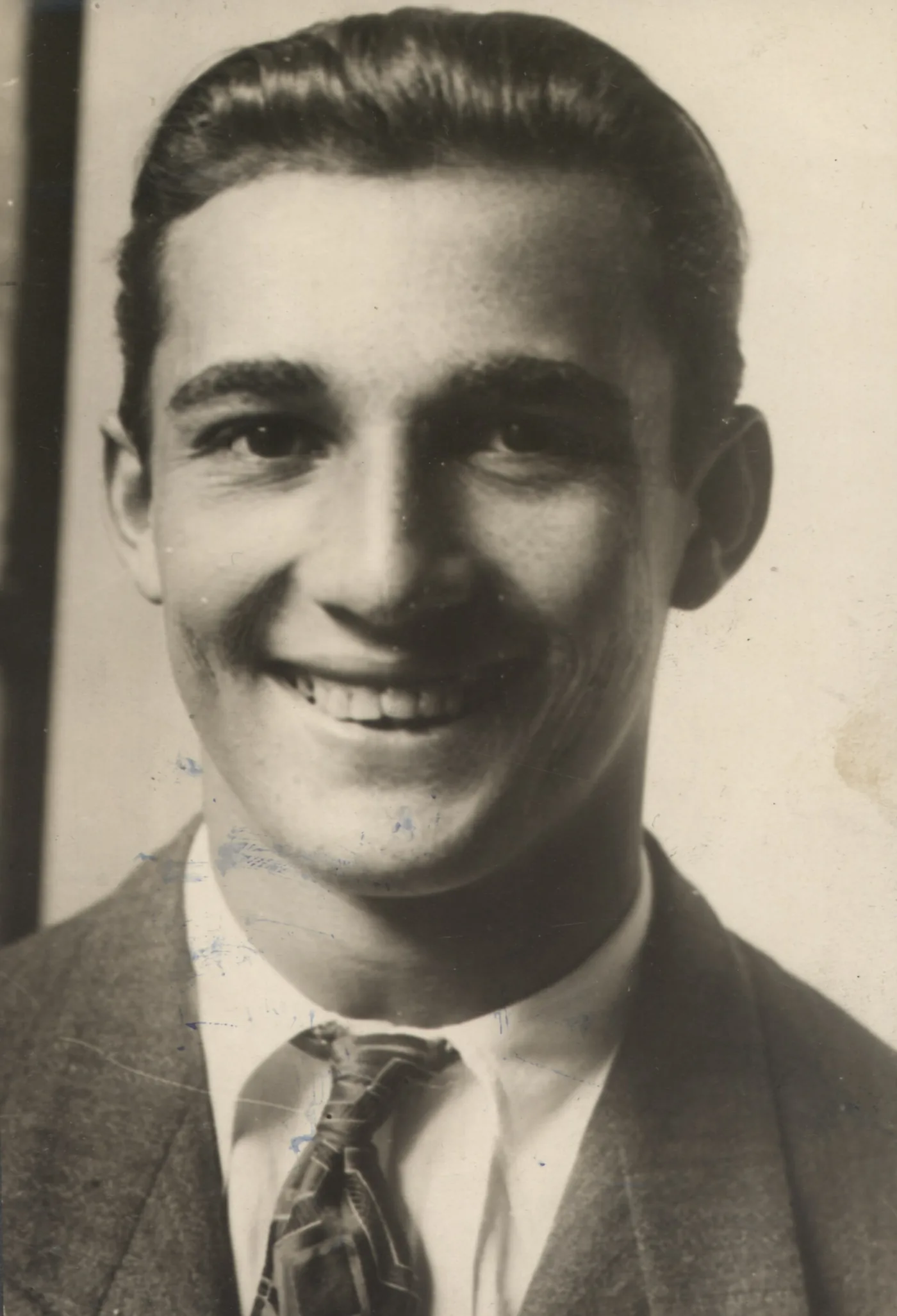
Carlos's younger brother Hélio, born in 1913, was slight and often unwell, and the story the family tells is that he rebuilt the techniques around angle and timing so that a smaller, weaker person could make them work. The popular version credits him with inventing that idea. The truer version is gentler on the facts and no less to his credit: using structure instead of strength was the art's principle from the beginning, the yielding that the word jūjutsu had always named. What Hélio did was insist on it and make it the center of how the family taught, so that the Brazilian art carried a clear promise to every small person who walked in.
The challenge, and the name
The name itself was made in public. From the 1930s the family issued open challenges in the Rio newspapers, inviting fighters of any style to test themselves against a Gracie in a no-rules match. Carlos faced the Japanese fighter Geo Omori as early as 1930, and for years afterward the family's name was the one Brazil's vale tudo spectacle turned on. The genius of it was as much promotional as physical. They proved the art where everyone could watch, over and over, and built a reputation no rival could talk their way past. The name was earned, but it was also marketed, on purpose, by people who understood that a demonstrated art spreads and a hidden one dies.
The 1951 Kimura fight with Hélio Gracie
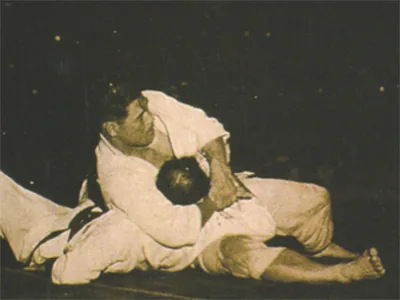
The most telling night was not a win. On an evening in 1951, in a Rio stadium packed with some twenty thousand people, Hélio faced Masahiko Kimura, one of the greatest judoka who ever lived. Kimura won. He caught Hélio in a reverse arm lock and, when Hélio would not submit, broke or dislocated the arm rather than let go, and still Hélio would not quit until his brother threw in the towel. Then the family did something that tells you what they were about: they named the technique after the man who had beaten their champion. In jiu-jitsu it is still called the Kimura. The name grew from that defeat as much as from any victory, out of the nerve not to surrender and the grace to honor the fighter who won.
What the Gracies built in Rio would not stay in Rio. A generation later it crossed to the United States and rewrote how the world thought about a fight, and that is the next chapter.
This is a beginner's journal, not instruction. Nothing here is training, health, or medical advice. Learn from a qualified coach, and tap early. Disclaimer