柔の道
Kosen judo and the ne-waza that shaped BJJ
The part of jiu-jitsu that Brazil would make famous, the long, patient fight on the ground, is often told as a secret that judo lost and Brazil recovered. The truer version is smaller and stranger: the ground fighting was inside judo the whole time, it was contested even in Japan, and the line from there to Brazil was never as clean as the story wants.
The ground was always there
Kanō's judo included 寝技 (ne-waza), the work done on the ground, from the start. It was never an afterthought bolted on later. But his judo prized the throw above all, and in the mainstream of the Kōdōkan the ground was where a match went when a throw had failed, not where a fighter chose to live. The techniques existed. The emphasis did not.
The students who chose the ground
The emphasis grew somewhere else. At Japan's higher technical schools, the kōtō senmon gakkō, students had been holding judo matches since the 1890s, and by 1914 they had a formal championship of their own. Their rules were looser than the Kōdōkan's in one decisive way: a competitor could pull the fight to the ground whenever he wanted, by dragging his opponent down without a throw, and then stay there as long as he liked. Under those rules a deep, patient ground style flourished, developed by specialists whose names meant little outside their world. This became known as Kosen judo, and it got good enough to worry the Kōdōkan. In 1925 the Kōdōkan tightened its own rules to limit groundwork, and in 1926 Kanō himself criticized the Kosen style as a sport that had drifted from real defense. The ground game was not a lost secret. It was disputed territory, inside judo.
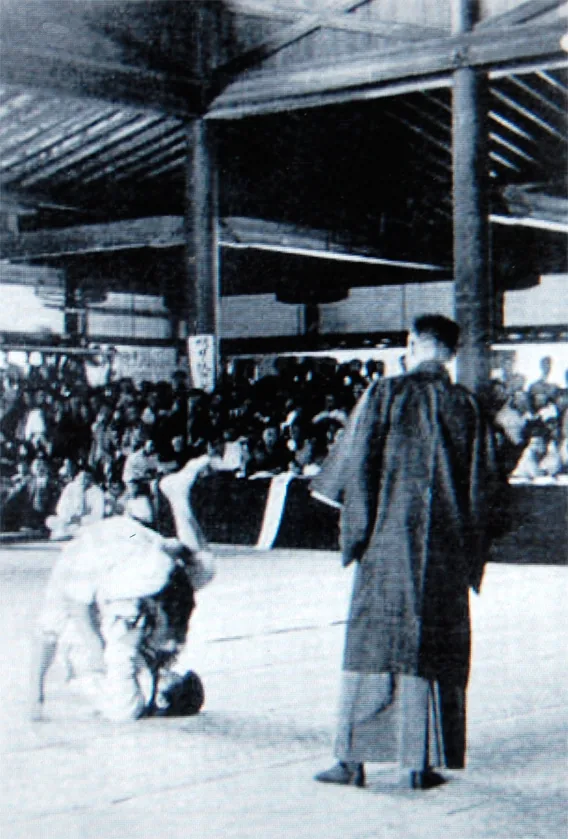
Maeda's ground game had many fathers
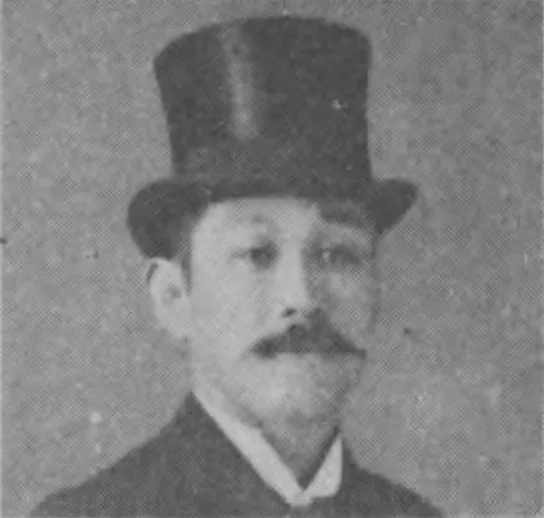
The man who carried the art to Brazil, Mitsuyo Maeda, was gifted on the ground. But his skill there had more than one source. The Kōdōkan groundwork he was raised on fed it, and so did the ground-heavy era he came up in and older jūjutsu specialists like Mataemon Tanabe of Fusen-ryū, whose groundwork had famously humbled Kōdōkan throwers a generation earlier. Most of all it grew from the years Maeda spent after leaving Japan as a traveling prizefighter, testing judo against wrestlers and catch men across three continents and keeping whatever worked.
Why the clean Kosen-to-Brazil story fails
So the neat pipeline, Kosen judo to Maeda to Brazil, is not wrong so much as airbrushed. The ground game had several parents and a contested childhood even in its home country, and the version Maeda eventually taught was less a school's preserved secret than a fighter's working synthesis, assembled in rings as much as in dojos.
What crossed the ocean, then, was one restless man's answer to a question he had spent a decade testing in public, not a pure tradition handed down intact. That man is the next chapter.
This is a beginner's journal, not instruction. Nothing here is training, health, or medical advice. Learn from a qualified coach, and tap early. Disclaimer