柔の道
The Art of Learning by Josh Waitzkin: what transfers to BJJ
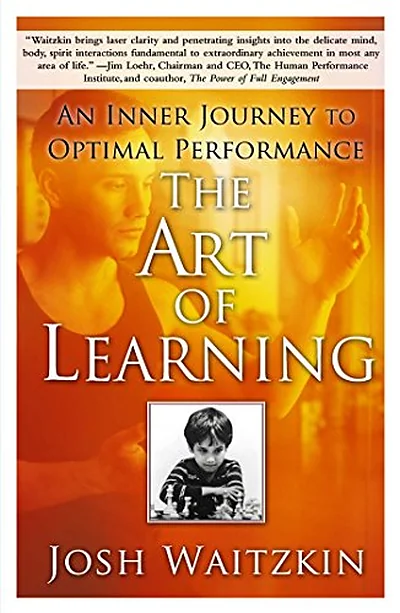
The Art of Learning: An Inner Journey to Optimal Performance is Josh Waitzkin's account of becoming world-class twice in arts that could hardly look less alike. The chess prodigy of Searching for Bobby Fischer became a National Master at thirteen and an International Master at sixteen, left the board, took up tai chi chuan, and won a push hands world championship at the 2004 Chung Hwa Cup in Taiwan. The 2007 book is his attempt to extract the method that carried across. Jiu-jitsu appears nowhere in it. The endorsement came later: Waitzkin took the method to the mat and earned a black belt under Marcelo Garcia in 2011. Read it as a manual for how to be taught and nearly every chapter lands on a first year of jiu-jitsu. Here is how.
Investment in loss: losing as tuition
The book's signature idea comes from Waitzkin's push hands training at William C.C. Chen's school. A beginner there faces the mat's own choice: tighten up and resist, sparing yourself the humiliation of being thrown, or stay soft, get thrown, and learn what threw you. Waitzkin names the second option investment in loss, giving yourself to the learning process while it costs you rounds, and he leans on the psychologist Carol Dweck's research for why it works: people who treat ability as buildable outlearn people who treat every loss as a verdict.
As a first-year habit, the idea becomes one round a night with winning demoted. Ask the partner who gives you trouble. When your guard starts to fail, skip the stiff-arm and the panic burst; let the pass arrive at half your usual resistance and track which frame failed first. Tap early instead of dying in a locked choke, ask one question, start again. A tap collected on purpose is tuition, and the progress post explains what it buys: you drown less long before you win more. The habit earns its keep around month two, when losing stops feeling like progress; the quitting post maps that cliff.
Making smaller circles: shrink one technique
Waitzkin's chess teacher Bruce Pandolfini started him nearly empty: king and pawn against king, clear principles studied until they dissolved into feel. The book calls the process numbers to leave numbers, internalizing the technical until you no longer think it. The physical twin is making smaller circles: months refining tai chi's basic straight punch, shrinking the motion while keeping its power, instead of collecting new techniques. The argument is blunt. Depth beats breadth, and collectors of fancy technique plateau.
On the mat the idea becomes a month-long drilling practice. Pick one escape you already half-know; the elbow escape from mount is ideal. Week one, drill it big: full bridge, big shrimp, all the space you want. Each week, remove motion: half the bridge, a shorter shrimp, the knee slipping in earlier, until the escape runs on an inch of space and a turn of the hips. A partner giving honest energy decides whether the shrinking is real, which is the whole argument of the drilling post. One escape made smaller will carry a first year further than ten new sweeps sampled once.
The toolkit runs deeper. The soft zone is concentration that bends around distraction instead of shattering, trained with noise rather than silence. Building your trigger condenses a fixed pre-training routine, attached to something you love, until a few breaths summon your best state. Both reward a full read.
Where to doubt The Art of Learning
A method distilled from one exceptional life carries a built-in question, and the reader criticisms Shortform collects put it directly: heavy autobiography, thin method, and few examples beyond chess and tai chi, which leaves unclear how the approach applies to learning anything else. Readers also find concepts turning fuzzy and mystical exactly where a beginner wants instructions. The reviewer Nate Shivar puts the structural problem in one line: the book "is a memoir first, and an educational how to second," so the lessons must be hunted rather than followed. Even Stephen Malina, a reviewer who loves the book and mines it for his own pursuits, concedes the core lesson is "deliberate practice literature 101" told unusually well, and names the hazard himself: part of the book's pull may be "the standard insight porn glow" of lived experience. The two takeaways above are the hunting done for you; the rest of the extraction is on the reader.
The legend also needs one calibration. The cover trades on the chess childhood a hit film made famous, and the myth outgrew the record: Waitzkin's title is International Master, earned at sixteen, alongside a U.S. Junior championship in 1994 and a shared one the year before. A serious record, and not a grandmaster's, whatever the marketing implies. The calibration ruins nothing. Take the method, leave the halo.
Who it is for
Anyone hunting for techniques should look elsewhere; the book teaches none. A beginner who struggles with being bad in public, which describes nearly every white belt, will find few books that transfer better to the mat. The two habits above are the appetizer; the book supplies the philosophy that makes them stick, tested by its author in three arts, the last of them jiu-jitsu.
You can find The Art of Learning on Amazon.
Questions readers ask
Is The Art of Learning a jiu-jitsu book?
No. The 2007 book draws on chess and tai chi push hands only. Waitzkin went all-in on Brazilian jiu-jitsu after writing it and earned a black belt under Marcelo Garcia in 2011, four years after the book, applying its method to a third art himself.
What does investment in loss mean?
Giving yourself to the learning process while it costs you rounds: staying soft and receptive under pressure instead of tightening up to avoid being thrown. For a white belt, the habit looks like rolling with better partners, letting positions fail at reduced resistance to see why, and treating early taps as tuition.
Is Josh Waitzkin a chess grandmaster?
No. He became a National Master at thirteen and an International Master at sixteen, won a U.S. Junior championship in 1994 and shared one the year before, and never earned the grandmaster title. His 2004 push hands world title and 2011 black belt under Marcelo Garcia came later, in other arts.
What is making smaller circles?
Waitzkin's principle of refining one technique to its essence rather than accumulating many. He spent months shrinking tai chi's straight punch while keeping its power. A jiu-jitsu version is drilling a single escape for a month while removing motion each week until it works in minimal space.
What are the main criticisms of The Art of Learning?
Reader criticisms collected by Shortform are that the book leans heavily on autobiography, explains its method thinly, and offers few examples beyond chess and tai chi, which leaves unclear how the approach applies to other skills. The reviewer Nate Shivar calls it a memoir first and an educational how-to second, and Stephen Malina, an admiring reviewer, adds the friendly version: the core lesson is familiar deliberate-practice ground, and part of the book's pull, he says, may be the glow of lived experience.
This is a beginner's journal, not instruction. Nothing here is training, health, or medical advice. Learn from a qualified coach, and tap early. Disclaimer