柔の道
How jiu-jitsu crossed to America: the garage and UFC 1
The family proved everything it built in Rio in private. A challenge in a newspaper, a match in front of a local crowd, a reputation that spread by word of mouth. For seventy years that was how the art made its case, one opponent at a time. Then, on a single night in 1993, it made the case to the whole world at once, and nothing about fighting looked the same afterward.
Rorion Gracie's garage in California
The crossing happened quietly first. In 1978 Rorion Gracie, one of Hélio's sons, moved to Southern California and began teaching out of his garage in the beach towns south of Los Angeles, years before the family's academy opened in Torrance. He brought the family tradition with him intact, including the challenge: he invited American martial artists of every style to test themselves against him on the mat, and he filmed the results. Those tapes, sold as Gracie in Action, showed karate and kung fu black belts being calmly controlled and made to quit by a man using an art almost no one in the country had seen. The garage was the beachhead.
Why the Gracies built the UFC
The tapes found the right viewer. With the entrepreneur Art Davie, Rorion built a tournament to answer the question the challenges had always asked, now on a national stage: put the styles against each other with almost no rules and see what actually works. It is fair to say the event was a showcase for Gracie jiu-jitsu. Rorion helped own it and helped design it, and it was built to make his family's point. The honest part is that the showcase did not have to lie. The point was true, and the tournament simply let everyone see it.
Why the Gracies sent Royce, the smallest brother
The clearest sign of what they were doing was who they entered. The family's most feared fighter was Rickson. The man they sent into the cage was Royce, chosen precisely because he was slight and unintimidating, about 180 pounds and built like nobody's idea of a champion. That was the argument, made flesh: not the biggest Gracie, but the one whose win would prove the oldest claim the art ever made, that a smaller person can beat a larger one.
UFC 1: November 12, 1993, in Denver
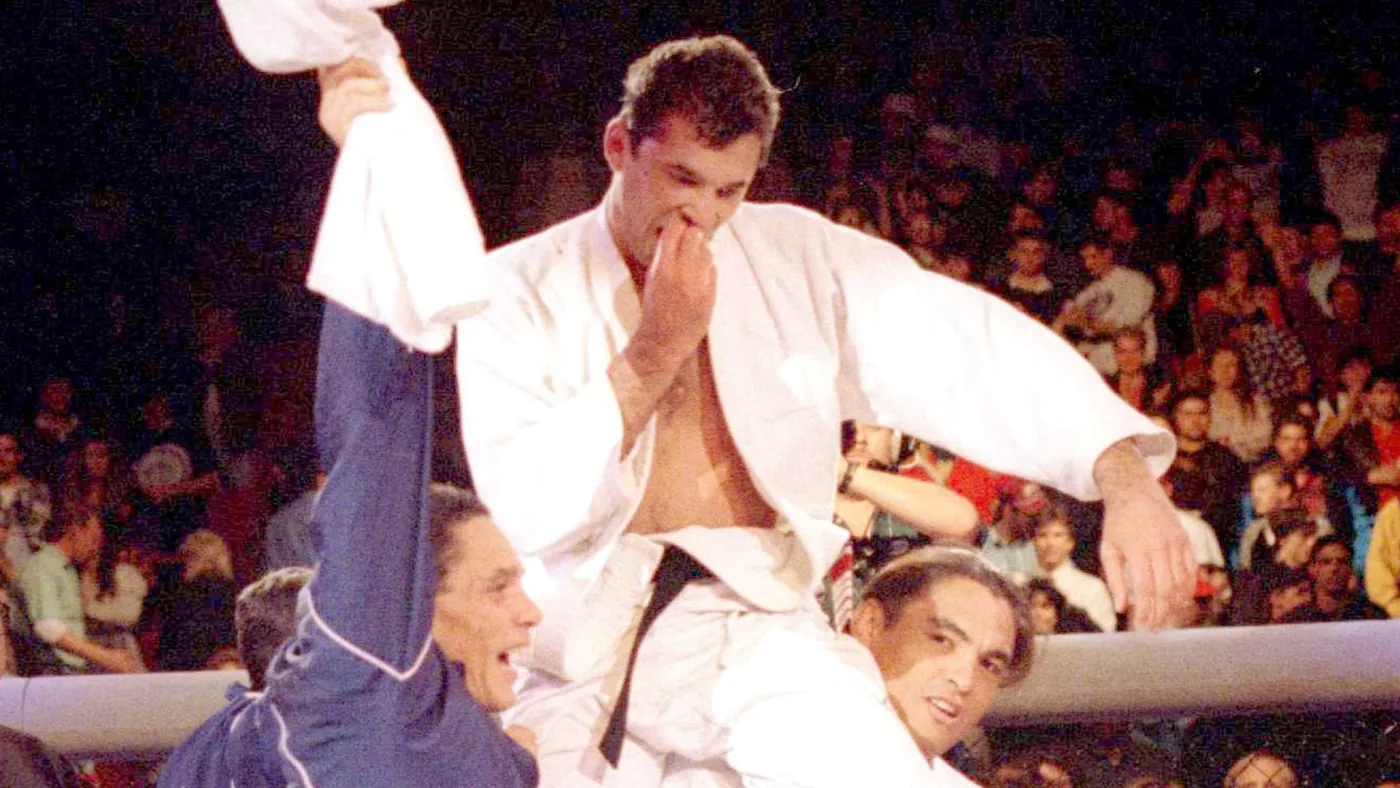
UFC 1 was held on November 12, 1993, in Denver. Royce, in a gi, went through bigger and stronger men one after another and made each of them quit, most of the time without throwing a meaningful punch. A slight man in pajamas calmly took much larger opponents to the ground and left them tapping the mat. The claim jūjutsu had carried since the peaceful, overcrowded world of the Edo schools, that skill and yielding beat size and force, held up in front of a television audience that had never once considered it.
How UFC 1 changed martial arts
The change was immediate and total. Every serious martial artist now had to learn the ground or lose on it, and within a few years no fighter could afford to ignore the art. Modern mixed martial arts is the aftershock of that night. The quiet craft that began among a thousand Japanese schools, crossed an ocean in a prizefighter's kit bag, and was rebuilt by a Brazilian family had become, four centuries on, the one thing every fighter in the world now has to know.
What it did with that victory, and what it is still arguing about with itself, is the last chapter.
This is a beginner's journal, not instruction. Nothing here is training, health, or medical advice. Learn from a qualified coach, and tap early. Disclaimer